Base operating view No active shock
34% Plan holdsWhen spreadsheets and gut feel are no longer enough
From Category Strategy to Capital Allocation and beyond, SnapStrat was built for the recurring, high-impact decisions where spreadsheets break, alignment is hard, and millions in revenue or margin are on the line.
How your application gets built
A repeatable decision system designed around your business
1. Design the Application
Define the decision, constraints, levers, risks, and the cycle timing it must support.
2. Build it collaboratively
Configure the data model, UI, workflows, scenario engine, and logic that match your real-world process.
3. Keep it fresh
We manage the application improving it over time—updating data, refining logic, and adapting it as your business and priorities change.
Execution snapshot
First application live
8–12 weeks
Engagement style
Co-designed with your business, analytics, and IT stakeholders
Outcome
An end-to-end DI application
Detailed use cases & case studies
Examples of the Decisions SnapStrat Powers
Use case
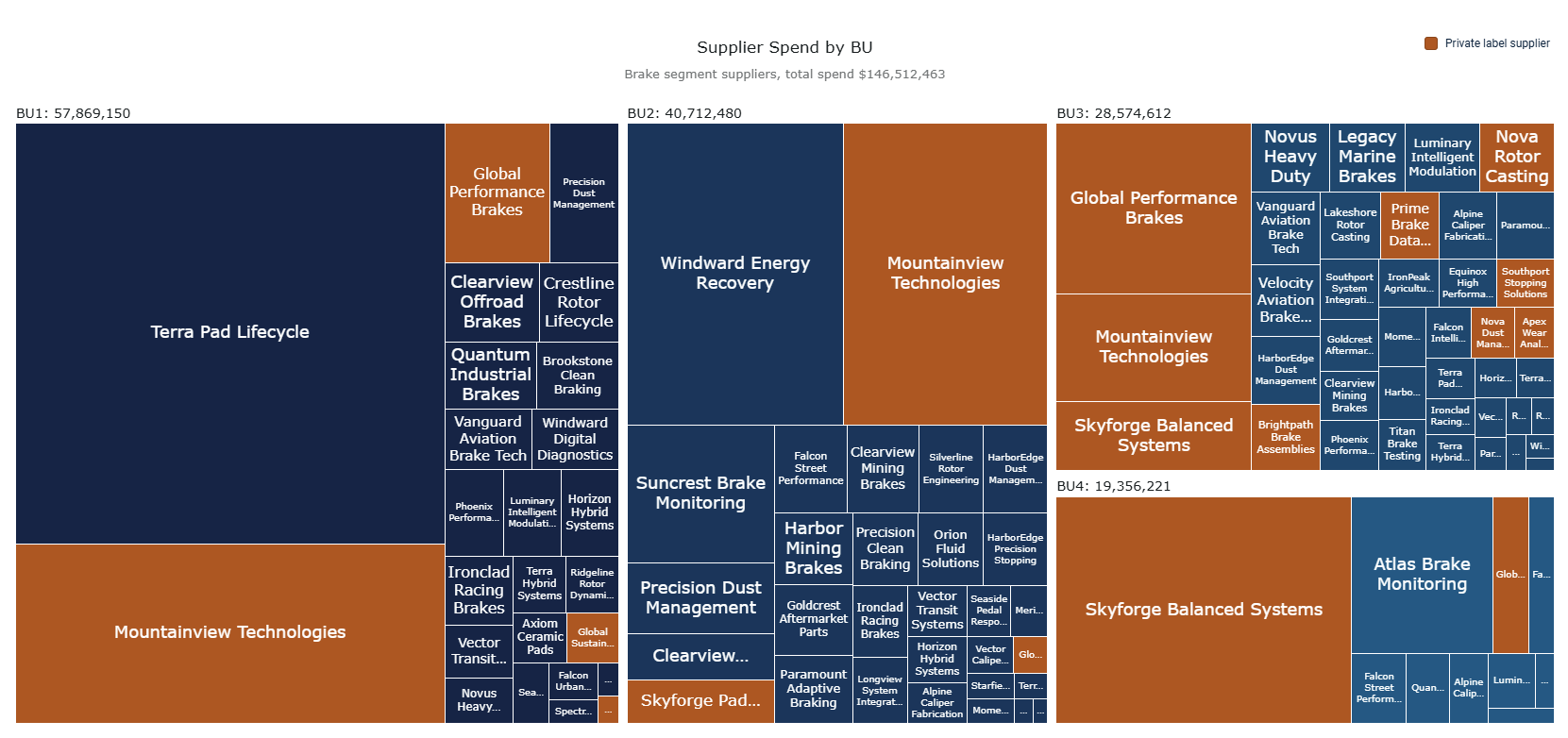
Category Strategy / Supplier Optimization
What is the optimal supplier mix, risk profile, and consolidation plan?
Use case
Capital Allocation / Fleet Optimization
How do we most effectively deploy our capital to replace aging equipment?
Use case
Strategic Planning / Investment Portfolio
How should we fund strategic initiatives within and across years given capital and capacity constraints?
Use case
S&OP under uncertainty
Align supply, demand, and inventory decisions as global risk signals change.
Use case - Category Strategy / Supplier Optimization
What is the optimal supplier mix, risk profile, and consolidation plan?
For category managers, the challenge is rarely lack of data. It is stitching together spend, contracts, risk, and performance into a decision that can actually be evaluated, made and monitored.
The decision
Supplier mix by category.
Where to consolidate, dual-source, or renegotiate?
Balance cost, risk, and private-label exposure.
The data
SKU-level spend by supplier, contract, and hierarchy.
Sales + margin data, product catalogue.
Internal product transfers & pricing.
The result
Optimal supplier strategies that balance cost, risk, and margin.
View 1 of 3
View 1 of 3
Use case - Capital Allocation / Fleet Optimization
How do we most effectively deploy our capital to replace aging equipment?
Fleet decisions live in the tension between reliability, cost of capital, and downtime. We built a decision intelligence application that creates a repeatable replacement plan that optimizes operating cost and reliability.
The decision
Which assets to replace, refurbish, or extend?
How to stage replacements within capital envelopes?
How aggressively to trade off reliability, risk, and spend?
The data
Asset age, condition, utilization, and failure history.
Operating costs, downtime, and service-level impact.
Capital budgets, funding constraints, and residual values.
The result
A defensible replacement schedule that balances cost, risk, and service, with a portfolio view finance and operations can both sign off on.
Use case - Strategic Planning / Investment Portfolio
How should we fund strategic initiatives within and across years given capital and capacity constraints?
Executive teams are asked to fund growth, efficiency, and risk-reduction initiatives across multiple business units and years. The problem isn’t ideas; it’s turning slideware business cases into a repeatable plan that trades off ROI, risk, and capacity at the portfolio level – and can be revisited every planning cycle.
The decision
Which initiatives to fund, defer, or stop altogether?
How to stage investments across years within capital and capacity envelopes?
How to balance growth, efficiency, and risk-reduction themes across the portfolio?
The data
Initiative-level business cases: costs, benefits, risk ratings, and dependencies.
Headcount and capacity constraints by function, region, and time period.
Financial targets, capital envelopes, and scenario assumptions from FP&A.
The result
A cross-portfolio plan that shows which initiatives are funded when, the trade-offs vs. constraints, and scenario views leadership can iterate on each planning cycle.
View 1 of 3
View 1 of 3
Use case - S&OP under uncertainty
How should supply, demand, and inventory plans change when external risk shifts?
S&OP decisions break when demand plans, supply constraints, and inventory targets assume the world stays stable. SnapStrat connects global risk signals to financial and operating assumptions so teams can update the plan before the next cycle.
The decision
How to align supply, demand, and inventory under changing risk?
Where should capacity, safety stock, or sourcing shift?
Which trade-offs preserve service levels, margin, and working capital?
The data
Demand forecasts, open orders, inventory, and service targets.
Supplier capacity, lead times, lanes, and production constraints.
Global risk signals: tariffs, port disruption, policy shifts, demand shocks.
The result
An updated S&OP plan that changes supply, inventory, and demand actions as external conditions move.
A solution for any high-value, recurring decision
One platform. Any high-value decision.
If you can describe the decision, SnapStrat can operationalize it. Let us know what you’re looking to solve.
Allocation & Prioritization
Budget, capital, or resource allocation across portfolios, markets, or products.
Capacity & Inventory
Balance stock, service levels, and working capital under supply and demand volatility.
Sourcing & Procurement
Events, awards, and long-term supplier portfolio design.
Workforce & Operations
Staffing, scheduling, and deployment decisions tied to demand, skills, and cost.
Merchandising & Channel Strategy
Assortment, pricing, and space decisions across channels and banners.
Customer Strategy & Loyalty
Design and calibrate loyalty programs, benefits, and experience tiers.